


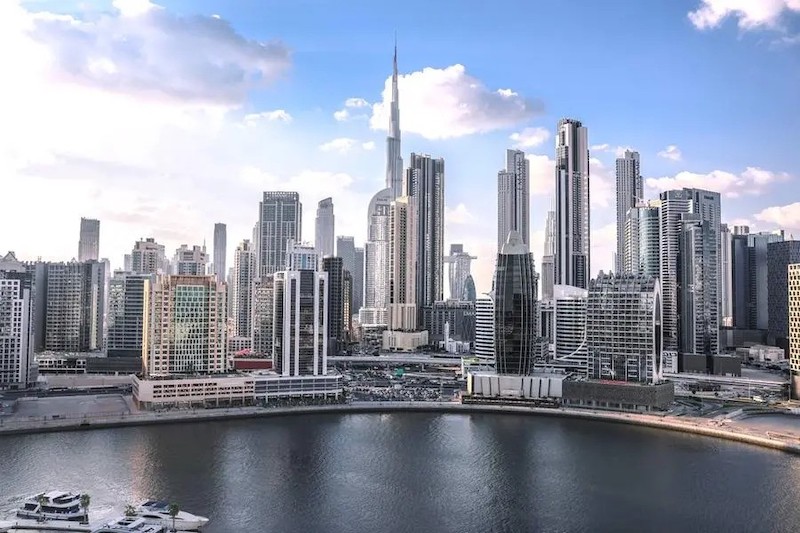
According to a new study of over 1.1 million transactions across the last 16 years, Dubai homeowners are now holding their properties for as long as Londoners and New Yorkers.
This exemplifies how the Dubai’s real estate sector has transitioned to stand alongside the world’s most mature markets, no longer driven by short-term investors.
From data analysis conducted with the Dubai Land Department by fäm Properties which looks at 687,406 primary market transactions between 2012 and 2025, and 425,083 resale market transactions between 2009 and 2025.
Of those, 480,604 primary market homes and 259,615 resale market properties remain with the original buyer, adding up to 740,219 residential properties purchased since 2012 that have never been resold. This is representative of 69.9% of primary market purchases and 61.1% of resale market transactions over the period.
The new data shows a consistent pattern and upwards trajectory across both market segments. Among primary market buyers, 42% of those who purchased in 2014 are still holding their property 11 years later, and the figure rises to 53% of 2017 buyers after eight years and 61% among those who bought in 2022 after three years.
“Buyers focused on flipping properties have been replaced by owners committed to staying in Dubai and holding on to them. That’s what a market looks like when it matures.
“Until now, much of the conversation about Dubai’s residential holding behaviour was built around a 2013 framework, but we’ve moved on from there. A buyer who purchased in Dubai in 2014 and is still holding their property today is behaving exactly like the median homeowner in New York or London.”
Firas Al Msaddi, CEO, fäm Properties
The resale market shows a similar trend, with 38% of 2014 buyers still in ownership after 11 years, 53% among 2017 buyers after eight years, and 65% of those who purchased in 2022 are still holding after three years.
Those figures reflect ownership trends in the US, where the average homeowner now stays for between 11 and 12 years, according to 2025 data from Redfin and the National Association of Realtors. Meanwhile, in the UK, only around 4% of homes change hands in any given year, implying many owners hold on to their property for well over a decade.
The new data analysis stems from DXBinteract – the market intelligence platform developed by fäm Properties in partnership with the Dubai Land Department records. All figures are reflective of ownership status at the end of April 2026.
Al Msaddi advises the change in ownership behaviour could be attributable to structural developments in Dubai’s residential market. The Golden Visa programme, introduced in 2019 and expanded in 2022, formed a direct link between property ownership and long-term residency, whilst regulatory reforms have enhanced protections for buyers purchasing off plan.
While the timing of the Golden Visa rollout and the impact of Covid-19 influenced a slight reduction in retention rates, these have since risen in 2020 with each successive group of buyers.
Dubai has also witnessed significant infrastructure investment over the same period, including new metro connections and the development of major new residential districts such as Dubai South, Dubai Creek Harbour and Dubai Islands. This has also extended the breadth of locations where buyers are willing to commit for the long term.